

It was 6:00 AM on a crisp Tuesday when I walked out to grab the mail and saw it. A neon-green, jagged ‘tag’ was sprawled across my century-old red brick garage. My stomach dropped. I didn’t just see a mess; I saw a permanent scar on a home I’ve spent years maintaining. If you’ve ever stood there staring at a spray-painted eyesore on your property, you know that frantic urge to grab the nearest scraper and go to town. But wait. Before you touch a single tool, take a deep breath. Brick is deceptively fragile, and a ‘quick fix’ can easily become a lifelong regret. I’m here to help you navigate this without losing your mind—or your masonry. [image_placeholder_1]
Stop the Panic Before You Scrub Your Brick to Death
I spent that first hour researching how to boost curb appeal, only to realize I was about to destroy mine in a moment of frustration. In my early DIY days, I made a classic rookie mistake: I reached for a heavy-duty wire brush and a high-pressure washer, thinking brute force was the answer. I ended up scouring away the ‘fire-skin’ of the brick—that hard, protective outer layer. Now, that one section of my garage absorbs water like a sponge and looks dull compared to the rest. We’re going to avoid that today. Removing graffiti is about chemistry, not elbow grease. You need to lift the pigment out of those deep pores rather than grinding it in. This is especially true if you’ve already invested in mastering the art of house painting and want your exterior to look uniform. Have you ever tried one of those ‘miracle’ cleaners from a big-box store only to have it do absolutely nothing? I want to hear about your most frustrating cleanup attempt in the comments below.
Can You Actually Save Your Wall Without Professional Help?
Many homeowners worry that ‘ghosting’—that faint, shadowy outline of the original graffiti—is an inevitable curse. It’s a valid fear. According to the National Park Service’s Preservation Briefs, improper cleaning can cause irreversible damage to historic masonry, making it more susceptible to freeze-thaw cycles and salt attack. But I’ve found that using a trick for getting paint out of rough brick crevices involving specialized poultices can yield a near-perfect result. It might take more patience than a standard local painting project, but protecting the structural integrity of your home is worth the extra afternoon. We also need to talk about why specialized masonry paint is worth the extra cost if you eventually decide to cover the area, but for now, let’s focus on the clean slate.
Test Your Solvents on a Hidden Corner
I remember the first time I tried to “save time” by treating a massive three-foot section of my chimney without a trial run. I used a high-strength solvent that was far too aggressive for the aged clay. Instead of lifting the paint, it thinned the pigment and drove it deeper into the porous mortar. The result? A permanent blue-grey smear that looked like a giant bruise on my house. Don’t repeat my mistake. Pick a spot near the ground or behind a bush to test your cleaner. This isn’t just about whether the paint comes off; it’s about making sure the chemical doesn’t discolor the brick itself. If you’re planning on mastering the art of house painting later, you need a clean, stable surface, not a chemical-soaked mess.
The Secret is Chemistry Over Brute Force
Think of the graffiti as a guest who has overstayed their welcome. You don’t want to kick them out with a sledgehammer; you want to make the environment so uncomfortable they leave on their own. This is where the trick for getting paint out of rough brick crevices comes into play. You need a gel-based or poultice-style remover that “clings” to the surface. Vertical walls are the enemy of liquid cleaners—they just run off before they can work. By using a thickened agent, you give the chemicals time to break the bond between the spray paint and the masonry. #IMAGE_PLACE_HOLDER_B#
Why the Dwelling Phase is Non-Negotiable
Patience is your most valuable tool here. Once you apply the remover, you have to let it sit, or “dwell.” On that Tuesday morning with my garage, I wanted to scrub after thirty seconds. If you do that, you’re just moving wet paint around. Most professional-grade removers need 15 to 30 minutes to actually liquefy the resins. You’ll see the paint start to crinkle or liquefy; that’s the signal that the chemistry is winning. If you rush this, you’ll end up needing a local painting project just to cover up the uneven ghosting you left behind.
The Low-Pressure Secret to Rinsing Pigment
When it’s time to rinse, put away the 4000 PSI tip. While we often discuss the danger of pressure washing wood siding before house painting, the risk to brick is equally high. High pressure can blast away the mortar joints or pit the brick face. Use a wide-angle fan tip and warm water if possible. The goal is to flush the dissolved paint out of the pores, not to strip the brick’s skin. If you find yourself still struggling with shadows, you might consider why mineral-based paints are better for brick than standard latex if you decide to eventually paint the masonry for a fresh look. Using the right rinsing technique ensures that if you do choose expert house painting advice for 2025 to update your exterior, the new coat will actually stick.
Most homeowners think that once the spray paint is gone, the job is done and they should immediately reach for a heavy-duty sealer to ‘protect’ the surface. This is where I see the biggest long-term disasters. Everyone says you need to seal masonry to keep it clean, but in my experience, applying the wrong sealer is a death sentence for your wall. If you use a film-forming repellent, you are essentially wrapping your house in a plastic bag. Moisture that naturally migrates from the inside of your home toward the outside gets trapped behind that layer. When winter hits and that water freezes, it expands and pops the face right off your brick. The Brick Industry Association (BIA) Technical Notes emphasize that any coating applied must have a high water-vapor transmission rate to prevent this exact type of structural failure. If you are worried about the finish of your exterior, take a moment to learn the damp rag test for checking if your wall is too chalky before you apply any new products.
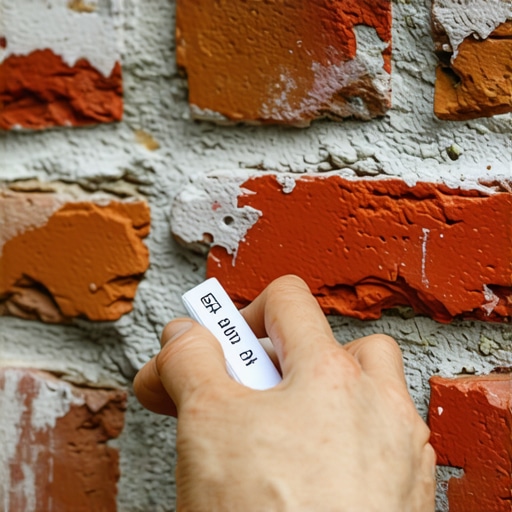
If you find yourself staring at a faint shadow after cleaning and think, ‘I will just paint over it,’ stop right there. This is a common trap that leads to massive peeling later. Standard latex is often the enemy of old, porous brick. Instead, you need to understand why mineral-based paints are better for brick than standard latex. These specialized coatings chemically bond with the substrate rather than sitting on top as a plastic film, which allows the wall to continue its natural moisture exchange. If you ignore this, you will find that why specialized masonry paint is worth the extra cost becomes painfully obvious once the cheaper alternative starts flaking off in sheets. Have you ever fallen into this trap of choosing the quick fix over the right chemistry? Let me know in the comments below.
Does Your Masonry Still Have Its Natural Defense System?
One of the most sophisticated mistakes involves ignoring the pH balance of the brick after using aggressive acidic or alkaline cleaners. If you do not neutralize the surface properly, your next local painting project will fail within months. The chemicals left in the pores will continue to react under the new coat, causing it to bubble. I have seen people spend thousands on expert house painting advice for 2025, only to have the results ruined by a few cents’ worth of chemical residue. Furthermore, you must consider the moisture levels coming from the ground. In many cases, why fixing your north van drainage is the only way to save your exterior paint is the most important lesson you can learn; without proper drainage, no amount of expert cleaning or painting will keep that brick looking pristine. Always look at the house as a complete system rather than just a dirty surface that needs scrubbing.
Once the chemistry is balanced and your wall is dry, the real fun begins—choosing the gear that prevents you from ever having to do this again. I’ve gone through enough cheap equipment to tell you that a bargain brush is just a one-way ticket to frustration. For masonry, I swear by a 1.25-inch heavy-duty nap roller. If you’re unsure how to choose the right roller nap for your specific wall, just remember: deeper texture needs more cushion to push the pigment into the ‘valleys’ of the brick. I also keep a dedicated airless sprayer, like the Graco Ultra, for larger sections. It provides that uniform finish you see in high-end local painting strategies revealed by the pros. By using the right tools, you reduce the physical strain and ensure the coating is thick enough to withstand the elements without looking ‘caked on.’ 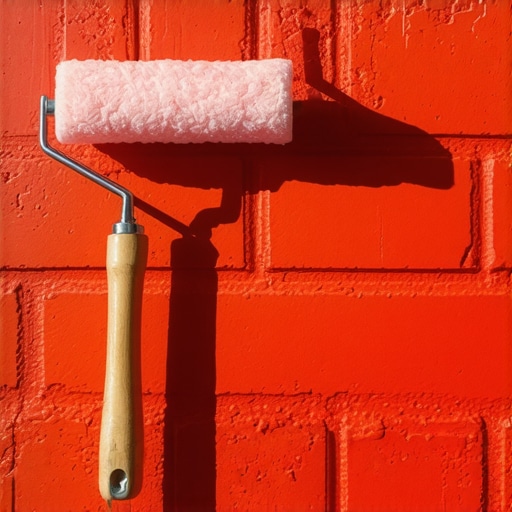
How Do I Keep This New Look From Fading?
Maintaining your masonry isn’t about a one-and-done application; it’s about seasonal surveillance. I recommend a quick walk-around every spring and autumn. You’re looking for hairline cracks in the mortar or any signs of ‘efflorescence’—that white, powdery salt that indicates water is moving through the brick. Learning how to maintain your newly painted exterior for ten years or more requires catching these small issues before they become structural nightmares. If you see a small chip, don’t wait. A tiny touch-up now prevents a full-scale local painting project next year. I also suggest keeping a ‘maintenance kit’ in your garage with a small jar of your specific color and a high-quality 2-inch sash brush for those quick fixes.
Where Exterior Protection is Heading in 2026
Looking ahead, I’m seeing a massive shift toward ‘sacrificial coatings.’ These are clear, breathable barriers applied over your brick or paint. If someone tags your wall again, the graffiti sits on the coating, not the brick, and you can wash it off with just hot water. This technology is moving away from the thick, waxy films of the past and toward nanostructured silanes that don’t change the look of your home at all. This is the future of expert house painting tips for 2025 and beyond. Additionally, the industry is moving toward infrared-reflective pigments. This means even a dark-colored brick won’t absorb as much heat, reducing the thermal expansion that often leads to cracking. According to ASTM D7789, the standard for ‘Measuring the Water Vapor Transmission of Coatings,’ the permeability of your finish is what dictates whether your brick survives a harsh winter or flakes off by March. I strongly urge you to check the technical data sheet of any product you buy to ensure it meets these high-breathability standards.
Take the Next Step in Protecting Your Investment
Don’t let your hard work go to waste by skipping the final protective layer. If you’ve just finished a cleanup or a fresh coat, my top recommendation is to apply a high-quality silane-siloxane water repellent. It’s the invisible shield your house deserves. If you’re ready to see what a professional touch can do for your curb appeal, don’t hesitate to unlock the power of professional painting for a stunning home by reaching out to experts who understand masonry chemistry. Your home is your biggest asset—treat it with the right tools and the right science.
The Hardest Lesson I Learned About Brick Restoration
After years of trial and error, I’ve realized that the most dangerous tool in your arsenal isn’t a chemical—it’s impatience. I once rushed a cleanup on a historical chimney and ended up with a permanent ‘shadow’ because I didn’t respect the dwell time. Remember, brick is a living, breathing material; it expands and contracts, and it holds onto its history in its pores. One major lightbulb moment for me was discovering that temperature matters just as much as the solvent. Trying to remove graffiti on a freezing morning is a losing battle because the chemicals become sluggish. Always aim for a mild, overcast day to give your cleaners the best chance to work without evaporating. Also, never underestimate the power of a pH-balanced rinse. If you leave the surface too acidic, you’re just inviting the next local painting secrets to fail when the new coat won’t bond.
The Kit I Trust for a Permanent Fix
If you want to move beyond the basic hardware store aisle, you need to look at what the preservationists use. I always keep three things in my truck for masonry emergencies. First, a high-quality gel-based remover like Prosoco Elephant Snot; it’s thick enough to actually stay on vertical surfaces where liquids just run off. Second, I swear by a stiff natural-bristle brush—never steel—to work the agent into the gaps. If you’re struggling with the deep textures, the trick for getting paint out of rough brick crevices usually involves a specialized poultice that draws the pigment out like a magnet. Finally, I always keep a copy of the BIA Technical Notes bookmarked on my phone. It is the ‘masonry bible’ and provides the scientific backing for why we avoid high-pressure washing. For those final touches, I rely on expert house painting advice for 2025 to ensure any color matching is seamless and durable.
#IMAGE_PLACEHOLDER_E#
Take Back Your Curb Appeal
Standing back and seeing your brick return to its original glory is one of the most rewarding feelings for a homeowner. It’s about more than just aesthetics; it’s about reclaiming your home from a moment of vandalism and proving that with the right science, nothing is permanent. Don’t be afraid to take it slow and treat each brick with the care it deserves. If the job feels too big or the ghosting is particularly stubborn, you can always unlock the power of professional painting for a stunning home by calling in experts who specialize in masonry chemistry. Your home’s exterior is the first thing the world sees—make sure it tells the story of a well-cared-for sanctuary rather than a neglected target. Before you apply any final sealers, don’t forget to perform the damp rag test for checking if your wall is too chalky to ensure your protection will actually last. Have you ever successfully removed a tough stain from your home’s exterior only to have a shadow remain? Let me know your experience in the comments below!