

I remember walking into a client’s auto shop about three years ago and feeling my heart sink right into my boots. Six months earlier, we had ‘saved money’ by applying a standard floor paint. Looking at it then, it was a disaster. Huge grey flakes were sticking to every tire that rolled through, and the bare concrete underneath was soaking up oil spills like a thirsty sponge. I felt terrible because I had let them talk me into a cheaper alternative instead of insisting on a high-durability epoxy. That day, I realized that in a high-traffic environment, ‘good enough’ is just a fancy way of saying ‘expensive mistake.’ I am going to show you exactly why making the switch to industrial-grade coatings is the only way to protect your investment for the long haul.
Your Floor Takes More Abuse Than You Might Realize
It is easy to look at a concrete slab and think it is indestructible, but business environments are brutal. Between the constant friction of pallet jacks, the chemical reality of cleaning agents, and heavy foot traffic, your flooring is under siege 24/7. I have seen so many owners wonder why your office walls are scuffing within weeks of a repaint, and the answer for floors is identical: the material simply was not designed for the friction. When you use a high-durability epoxy, you are creating a chemical bond that is significantly stronger than the concrete itself. This is not just a thick layer of paint; it is a structural reinforcement. If you have ever struggled with the secret to keeping paint from peeling on old porch floors, you know that moisture and bonding are everything. Multiply that struggle by a thousand, and that is what your commercial facility is facing every single day.
Is This Industrial Stuff Actually Worth the Price Tag?
I get the skepticism. The initial quote for a multi-layer epoxy system can make any property manager blink twice. However, the data tells a different story. According to NACE International (now AMPP), the global cost of industrial surface degradation is in the trillions, and high-performance coatings are cited as the number one way to mitigate these losses. You aren’t just buying a pretty color; you are buying a non-porous, seamless shield that prevents cracks from spreading and stops liquids from reaching the subfloor. I once made the mistake of thinking a thick primer would suffice, but I quickly learned that without the resin-to-hardener ratio of a true epoxy, you are just waiting for a peel to start. Have you ever spent a fortune on a facility ‘refresh’ only to see it look tired and worn out within a single quarter? It is a frustrating cycle to be stuck in.
Safety and Visibility Are More Than Just Compliance
One thing I always tell my neighbors in the commercial world is that a bright, glossy epoxy floor is not just for looks. It actually saves you money on your electric bill. These coatings have high light-reflective values, meaning you need fewer overhead fixtures to keep the workspace safe. This is why many industrial facilities choose high visibility safety yellow for floor markings directly on an epoxy base; it stays crisp and visible for years rather than fading in months. We are about to look at the specific types of epoxy that work best for different industries, so you can stop repainting and start producing.
Stop the Peeling Before it Starts with Mechanical Grinding
If you pour water on your concrete and it beads up like a waxed car, you are in immediate trouble. I learned this lesson the hard way on a warehouse project in New Jersey a few years back. We thought we could just power wash the floor and start rolling, but the previous owner had applied a silane sealer that was invisible to the eye. The epoxy didn’t stand a chance; it peeled off in sheets like sun-damaged skin within a month. This is why you must mechanically grind the surface to a profile similar to 80-grit sandpaper. It is messy and loud, but it is the only way to ensure the chemical bond actually takes. If you ignore this step, you will end up wondering the reason you should never paint over peeling paint in any context, but especially on a high-traffic floor. 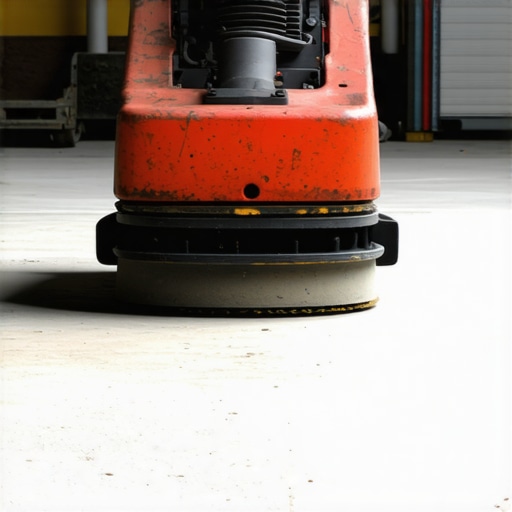
Mix Like Your Business Depends on It
Most DIY-level failures happen at the mixing station. You are not just stirring a pot of soup; you are initiating a complex thermal reaction. I always use a Jiffy mixer on a low-speed drill to keep things consistent. If you go too fast, you whip air into the resin, and you will spend the next four hours frantically chasing bubbles with a spiked roller. It is a very similar frustration to learning how to paint a metal bulkhead without the paint bubbling—trapped air is the ultimate enemy of a professional finish. Once the resin and hardener meet, the clock starts ticking. You have a narrow window of ‘pot life’ before that expensive liquid turns into a solid brick inside your bucket.
The Multi-Layer Shield Strategy
Applying one thick coat is a recipe for a structural disaster. To get that bulletproof finish, you need a dedicated primer layer first. This thin coating penetrates the pores of the concrete and acts as an anchor for everything that follows. Then comes the build coat, where you add your thickness and any necessary anti-slip aggregates. Think of it like why your new home needs a third coat of white paint; depth and layering equal long-term durability. For industrial settings, I always recommend finishing with a high-solids polyaspartic topcoat. It is UV stable and resists those nasty hot-tire pick-up marks that frequently ruin standard garage floor paints.
Why Temperature and Humidity Will Ruin Your Week
I have seen crews try to pull off an epoxy job during a humid summer afternoon and wonder why the floor stayed tacky for three days. It is the exact same headache as the reason your front door stays tacky for days after painting. High humidity can cause the epoxy to ‘blush,’ leaving a white, oily film on the surface that ruins the aesthetics and the bond. Always check your dew point before you start. If the floor temperature is not at least five degrees above the dew point, put the rollers down. It is better to lose one day of production than to have to grind off a failed five-figure floor. This level of technical precision is exactly the difference between contractor grade and premium paint systems; the margin for error is razor-thin, but the result is a surface that can survive decades of forklift abuse.
The Prep Myth That Destroys Professional Finishes
Most people assume that if the floor is clean and dry to the touch, it is ready for coating. I am going to challenge that right now: cleanliness is only 20% of the battle. The biggest “oops” factor I see in the field is ignoring Moisture Vapor Transmission (MVT). Think of your concrete slab like a massive, dense sponge. Even if the surface looks bone-dry, hydrostatic pressure can push water vapor up through the pores. When you seal that with a non-breathable epoxy, that vapor has nowhere to go. It builds up pressure until it literally blows the coating off the surface in small bubbles or “osmotic blisters.” I have seen entire warehouse floors fail because the crew didn’t perform a simple calcium chloride test. It is one of the main reasons why your local painting estimates vary so wildly in price; a pro includes moisture testing, while a budget contractor just starts rolling.
Why Your Slab Might Be Sweating Under Your Feet
If you have ever wondered why your basement walls are damp behind the new paint, the same physics are at play on your floor. According to the Painting Contractors Association (PCA), surface preparation must account for the alkalinity and moisture content of the substrate to ensure long-term adhesion. If you skip the moisture barrier primer on a high-risk slab, you are basically throwing money into a hole. 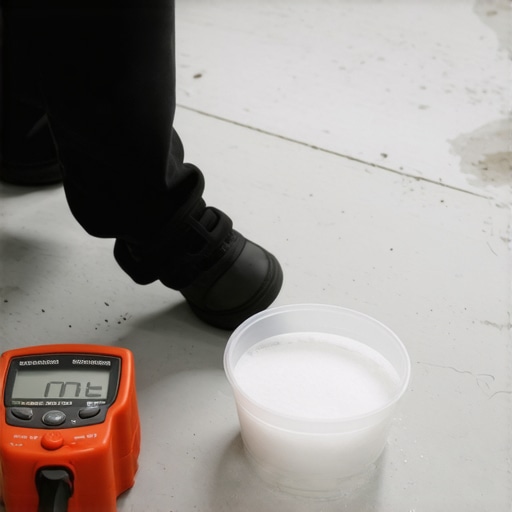
Can a Floor Actually Breathe Through a 100% Solids Epoxy?
The short answer is no, and that is exactly why we use specialized “breathable” urethanes in specific scenarios. A common mistake is thinking that “more product” equals “better protection.” If you apply a 100% solids epoxy over a slab with high moisture readings without a moisture-remediation primer, you are creating a ticking time bomb. It is a level of technicality that separates those who master the art of house painting with these pro tips from those who just apply color. You also have to watch out for environmental contamination during the cure. If a painter is trying to save money, you might find yourself checking how to tell if your painter is diluting the paint with water or solvent, which completely compromises the chemical chain of an industrial epoxy.
The Invisible Trap of Over-Aggressive Prep
Here is the nuance: you can actually over-grind a floor. If you use a diamond cup wheel that is too aggressive, you create deep grooves that the epoxy cannot bridge smoothly, leading to “pinholing.” These tiny holes are gateways for chemicals to reach the concrete. It is the same frustration as why your garage door paint is bubbling near the bottom—moisture finds the weakest point and exploits it. Have you ever fallen into this trap where a “simple” project turned into a technical nightmare? Let me know in the comments below, because I have likely been there too. To avoid these headaches, always ensure you are using the power of professional painting for a stunning home or business by vetting the mechanical profile of the floor before the first drop of resin hits the ground.
The Two Gadgets That Live in My Truck
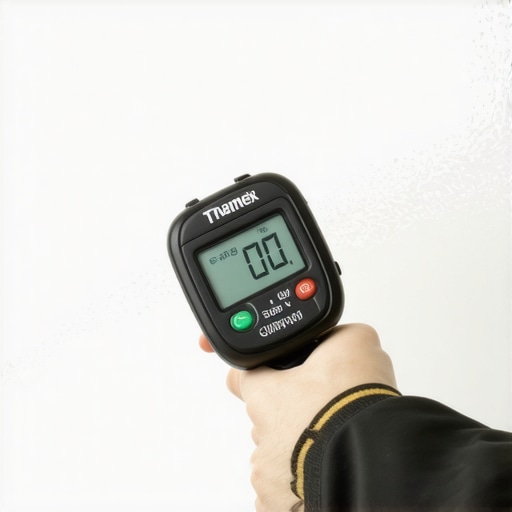
People often ask me why I carry so much tech for a painting job. The truth is, my Raytek infrared thermometer is more important than my finest brush. I use it to check the slab temperature every hour because if that concrete is too cold, the epoxy won’t cross-link, and you’ll end up with a sticky mess. It is the same level of care required when you master the art of house painting with these pro tips. I also swear by the Tramex CME5 moisture meter. It gives me a non-destructive reading of what is happening three-quarters of an inch inside the slab. If you are serious about painting your home or business, you have to stop guessing and start measuring.
Don’t Kill Your Shine With the Wrong Cleaner
The fastest way to ruin a twenty-thousand-dollar floor is to let your janitorial crew use a generic ammonia-based cleaner. Ammonia is an acid that will slowly etch the surface of your polyaspartic topcoat, turning that high-gloss finish into a dull, cloudy haze. I always tell my clients that how to maintain your newly painted exterior for ten years or more is actually quite similar to interior floors: it is all about gentle chemistry. Use a pH-neutral cleaner and microfiber pads. According to the Society for Protective Coatings (SSPC), abrasive cleaning with improper chemicals is a leading cause of premature coating failure in high-traffic facilities. If you want it to last, treat it like the finish on a luxury car, not a sidewalk.
How do I keep my industrial floor from scratching over time?
The secret is not just the cleaning; it is the prevention. I always recommend installing heavy-duty walk-off mats at every entrance. Sand and grit act like sandpaper under the wheels of a forklift or even heavy foot traffic. This is why you see why your office walls look different depending on the bulb; the micro-scratches on a floor change how light reflects, making it look dirty even when it is physically clean. If you can stop the grit at the door, you have won ninety percent of the battle. You might also consider looking into expert house painting advice for 2025 which emphasizes that integrated durability is the new standard for all surfaces.
The Tech Coming to Your Floor Next Year
I am keeping a close eye on UV-LED curable coatings as the future of the industry. Right now, we often wait twenty-four to forty-eight hours for a floor to reach full chemical resistance. With UV-curable resins, we roll it out, pass a specialized light over it, and you can drive a semi-truck on it five minutes later. It is a massive game-changer for businesses that cannot afford a weekend of downtime. This focus on speed and durability is exactly the power of professional painting for a stunning home or industrial space. Before you sign your next contract, ask your painter if they have invested in a high-quality moisture meter like the Tramex; if they haven’t, they are just guessing with your money.
The Hardest Lessons I Learned on the Shop Floor
After decades of getting my hands dirty, the biggest lightbulb moment was realizing that concrete is alive. It breathes, it moves, and it holds secrets. I have seen beautiful floors fail because someone forgot that why your local painting estimates vary so wildly in price usually comes down to the invisible prep work. If a quote seems too good to be true, they are likely skipping the moisture testing. Another thing experts won’t tell you? You can’t rush the cure. I once cost a client three extra days of downtime because I tried to force a fast cure in high humidity, and it turned the floor into a cloudy mess. Always respect the chemistry.
The Pro Tools I Never Leave Home Without
If you are serious about industrial-grade results, you need more than just a roller. My essential toolkit starts with the Tramex CME5 moisture meter; it is the only way to sleep at night knowing your epoxy won’t blister. I also recommend checking the NACE/AMPP standards for surface preparation as they provide the scientific baseline for what we do. For the actual application, never settle for a hardware store mixer. A Jiffy Mixer on a low-speed drill ensures you do not trap air, which is one of the most important master the art of house painting with these pro tips that translates directly to heavy industrial floors. Finally, always have an infrared thermometer on hand to ensure the slab is not too cold for the resin to bond.
#IMAGE_PLACEHOLDER_E#
Build a Space That Lasts for Decades
Investing in a high-durability floor is about more than just maintenance; it is about respect for your business and your team. When you choose to unlock the power of professional painting for a stunning home or warehouse, you are making a statement that quality matters. Don’t be afraid to ask the hard questions about moisture barriers and mechanical profiles. The goal is to stop the cycle of repainting every year and finally have a surface that works as hard as you do. When you follow top local painting strategies, you turn a utility into an asset. Have you ever had a floor coating fail on you within the first year? Let me know what happened in the comments below.