

Have you ever spent hours scrubbing your kitchen cabinets only to find that they feel just as sticky as when you started? I remember the frustrating moment when I thought I’d finally got them spotless, only to run my hand over the surface and feel that initial stickiness lingering stubbornly. It was like hitting a wall in my cleaning routine, and I knew I wasn’t alone in this experience. That lightbulb moment — realizing that I was missing a crucial step — changed everything for me.
Getting to the Bottom of Sticky Cabinets: Why It Usually Happens
Sticky residues on cabinets can feel like a never-ending saga. You might think that a good wipe-down would do the trick, but often, the problem isn’t just surface dirt. It could be lingering grease, soap scum, or even a reaction between cleaning products and the cabinet finish. Surprisingly, many people, myself included early on, fall into the trap of using the wrong cleaning agents or neglecting to remove built-up layers over time. According to experts, applying harsh chemicals or scrubbing too aggressively can actually cause a film to form, making surfaces even more resistant to cleaning — not to mention damaging the finish itself. For example, using strong solvents like bleach or ammonia directly on cabinets can lead to an adhesive-like residue that’s tough to eliminate.
If you’re tired of battling with sticky cabinets that resist your best efforts, don’t worry. We’re going to dive into the real reasons behind that pesky residue and walk through proven methods to get your cabinets pristine and smooth again. Trust me, once you understand what’s really going on, it becomes much easier to choose the right approach.
Is It Worth Spending Hours Trying Different Cleaners?
Many folks, myself included, initially thought simply changing cleaning products or adding more elbow grease would do the trick. But here’s a little secret I learned early on: not all cleaning methods are created equal. I once tried dozens of different sprays and scrubbers, wasting time and risking damage, before discovering that some of my assumptions about cleaning products were off base. For example, relying solely on vinegar and water seemed natural but often failed to cut through stubborn grease on cabinets with satin or semi-gloss finishes. Interestingly, studies show that using the wrong cleaning agent can intensify residue buildup over time, making future cleaning even more difficult. So if you’re tired of a never-ending cycle of cleaning and re-cleaning, stay tuned — we’re about to explore strategies backed by real eco-friendly options and expert advice that will finally give you results you’ll be happy with.
Start with a Gentle Cleanser to Loosen the Residue
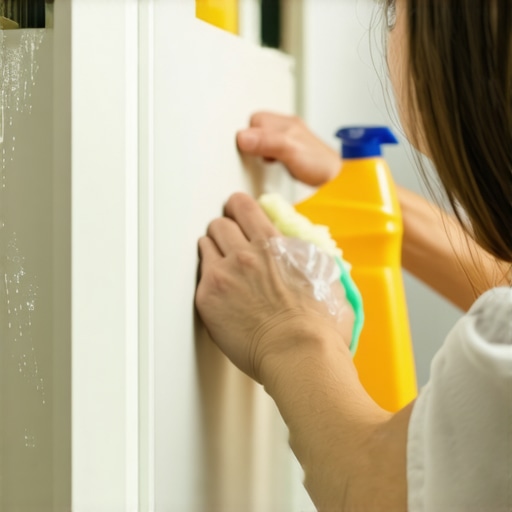
Begin by applying a mixture of warm water and a few drops of dish soap or eco-friendly cleaner directly onto the sticky areas. Use a soft cloth or sponge to gently work the cleaner into the surface, breaking down the grease and grime. I remember gently soaking a rag in the solution and pressing it against stubborn spots for a few minutes before wiping—this softened the residue, making the removal easier.
Scrape Off Excess Carefully to Avoid Damage
Use a plastic putty knife or a plastic scraper to lift off loosened grime without scratching the cabinet finish. During my first attempt, I carefully ran the scraper along the surface, applying just enough pressure—much like peeling a sticker—to avoid destroying the veneer. Always hold the scraper at a shallow angle to prevent gouging the wood or laminate.
Apply a Solvent for Stubborn Residue
If residue persists, switch to a gentle solvent like white vinegar or a commercial degreaser. Dampen a cloth with the solution and apply it directly onto stubborn patches, letting it sit for a few minutes. I once used plain vinegar on a particularly greasy cabinet, and after a brief wait, a quick wipe removed the residue completely, revealing a smooth surface underneath. Remember, always test a small inconspicuous area first to prevent damage.
Use Rubbing Alcohol for Difficult Areas
For really tenacious spots, lightly dab a cloth with rubbing alcohol and scrub gently. This breaks down oil-based residues effectively. Just like I experienced when tackling a sticky patch near the handle, this method rapidly dissolved the buildup without harming the finish. Be cautious to avoid over-saturation, which can lift the veneer or finish over time.
Rinse and Dry Thoroughly
After removing the sticky layer, rinse the area with clean warm water to eliminate any residual cleaner or solvent. Use a soft, lint-free towel to dry the surface completely. I found that the drying step is crucial; lingering moisture can attract dirt later or interfere with subsequent finishes.
Optional: Polish for a Fresh Look
Finish by applying a suitable cabinet polish or wax to restore shine and provide a protective layer. A light buffing with a microfiber cloth gives the cabinets a renewed, like-new appearance. Remember, choosing a polish compatible with your cabinet’s finish is essential—consult your manufacturer’s guidelines or check out details on professional painting tips.
 Many homeowners believe that choosing the brightest white or the thickest paint guarantees a flawless finish, but in my experience, these assumptions can lead to pitfalls. For instance, believing that all paints are created equal or that thicker coats yield better coverage often results in uneven textures or prolonged drying times. This misconception can be costly, especially if it causes you to select a paint that isn’t suited for your specific surface or climate, leading to issues like bubbling or peeling over time. A common trap is oversimplifying the preparation process, such as skipping primer or neglecting surface cleaning, which can significantly affect the longevity and appearance of your paint job.
What do experienced painters really know about color layering and primer use that amateurs overlook?
Skilled professionals understand that proper layering, involving appropriate primer and strategic color transitions, is crucial for a seamless result. The misconception that more coats always mean better coverage ignores the importance of surface prep and the underlying paint quality. For example, using high-quality, eco-friendly paints that cover in fewer coats can save time and reduce indoor VOC exposure, aligning with health and environmental considerations addressed by this resource. Another nuance often missed is understanding the importance of finish types—matte, eggshell, semi-gloss—and their compatibility with the space’s lighting and function. Wrong choices here can underscore imperfections or make cleaning difficult, impacting both the aesthetics and practicality of your project.
Beware of primer myths, too. Many assume that primer is optional or just a filler, but this step can prevent bleed-through, hide previous stains, and improve adhesion—especially over problematic surfaces like glossy or stained finishes. Skipping primer or selecting the wrong type can cause uneven absorption and, ultimately, a subpar finish that chips or fades prematurely. For insights into avoiding these costly mistakes, check out this article on hidden costs.
Moreover, novice painters often underestimate the importance of environmental factors—temperature, humidity, and even lighting conditions during the painting process—which can dramatically influence the drying and curing times, and thus, the final appearance. A little dry, a little damp, or unanticipated sunlight can all undermine your efforts, leaving streaks or uneven gloss. Understanding these nuances enables more predictable results and a professional finish. When approaching your next project, remember that beyond tool selection and color choice, mastery lies in appreciating these subtle technical aspects. Think you knew everything about house painting? Let me know in the comments. Take these insights seriously, and your paint job will stand the test of time.
Ensuring your paint work remains flawless over time requires more than just selecting quality materials; it hinges on having the right tools and following proven methods. Personally, I swear by certain equipment that elevates my results and saves me headaches down the line.
The Essential Tools for a Professional Finish
One of my must-haves is a high-quality extension pole for paint rollers. Using a robust, lightweight pole allows me to reach ceilings and high walls without straining, maintaining consistent pressure and avoiding streaks. Pair it with a roller cover designed for your specific surface—foam for smooth walls, nap-covered rollers for textured surfaces. I prefer microfiber covers because they hold more paint and produce less lint, which translates into a smoother finish.
Another game-changer is a cordless paint sprayer, such as the Wagner Flexio series. It offers uniform application, especially on large surfaces, significantly reducing roller streaks and brush marks. I rely on this device for projects where time and precision matter, like cabinets or intricate trim. It’s important to invest in a sprayer with adjustable settings to control paint flow, helping prevent drips and overspray. For detailed areas, I switch back to brushes—I recommend a set of synthetic brushes with fine bristles for sharp corners and edging.
Maintaining Your Equipment for Long-Term Success
Proper cleaning and storage extend the lifespan of your tools and ensure they perform consistently. For brushes and rollers, I use a mixture of warm water and mild detergent, gently working out residual paint. A dedicated cleaning tool, like a silicone scraper, helps remove dried paint from brush bristles without damage. After cleaning, I store brushes with the bristles held upright or hanging to prevent warping. For sprayers, I follow the manufacturer’s instructions, flushing the system with clean water or solvent to prevent clogs.
The Future of Painting Tools: A Digital Leap
Emerging technology is shaping the future of house painting—software apps now help visualize color schemes accurately, reducing guesswork and costly mistakes. Additionally, developments in eco-friendly, fast-drying paints combined with smarter equipment promise less hassle and more durable finishes. As these innovations become mainstream, I’ll be experimenting with automated spray systems capable of uniform application with minimal human input, ensuring consistent quality regardless of skill level. Staying up-to-date with these tools ensures your projects stay ahead of the curve.
How do I maintain tools and techniques to keep my paint’s quality over time?
Regularly inspecting and cleaning your tools after each project prevents residual paint buildup that can compromise application quality later. Maintaining equipment according to manufacturer guidelines ensures it performs optimally, saving you from costly replacements. For example, experts recommend replacing spray nozzle filters annually to prevent clogs and uneven spraying—an essential step I never overlook. Also, investing in protective gear like painter’s coveralls and proper ventilation devices safeguards your health and maintains tool condition—think of them as your long-term investment in quality work. To see how even minor maintenance can make a big difference, read more about the hidden costs of neglecting proper upkeep. Don’t hesitate to try advanced cleaning techniques, like using a vinegar and water solution for brushes, which can extend their usability significantly—your future self will thank you.
The Hardest Lesson I Learned About house painting,painting,local painting
One of my most eye-opening experiences was realizing that rushing through prep work only leads to a finish that looks amateurish and doesn’t last. Taking time to sand, prime, and clean surfaces before applying paint radically transformed my results, saving me money and frustration in the long run.
3 Myths About house painting,painting,local painting That Held Me Back
I used to believe that thicker coats always meant better coverage, but I soon learned that proper layering with quality primer makes a significant difference. Also, I thought all paints were interchangeable—turns out, choosing the right finish and eco-friendly options, like those discussed in this resource, can upgrade your project.
What Experts Won’t Tell You About house painting,painting,local painting
Professionals understand that environmental factors—temperature, humidity, and lighting—impact drying and curing times, which influences the final look. Paying attention to these details, along with tools like high-quality brushes and sprayers, ensures a professional finish that stands the test of time.
My Essential Toolkit for house painting,painting,local painting
From a durable extension pole for even strokes to a reliable cordless sprayer, my tools have made all the difference. Regularly maintaining these, as advised in this article, prolongs their lifespan and guarantees consistent results.
Your Next Step in House Painting Journey
Remember, perfecting your painting skills involves understanding subtle nuances and investing in the right tools. Don’t shy away from experimenting with new techniques or seeking out advanced resources. Every brush stroke is an opportunity to improve. How have your experiences shaped your approach to house painting? Share your stories below—I’d love to hear what worked (or didn’t) for you.