

I remember sitting at my desk three years ago, staring at a bright, aggressive red wall that I thought would spark creativity. Instead, it just gave me a pulsing headache by 2:00 PM every single day. My heart rate would spike just looking at the corner of the room. I was drinking three extra cups of coffee just to fight the mental fatigue, never realizing the culprit was the very paint I’d picked out myself. It was a classic rookie mistake. I’d fallen for the ‘bold colors for bold ideas’ myth, but in reality, I was just overstimulating my brain until it quit on me. I spent hours scrubbing at old drips and trying to cover it up, but without the right guidance, I was just spinning my wheels. I felt trapped in my own workspace.
How a Simple Color Swap Saved My Workday
Once I finally admitted that the red had to go, I dove deep into color psychology and realized I needed something that would lower my blood pressure, not raise it. That is when I found the magic of soft blues. This isn’t just about making things look pretty; it’s about hacking your environment to keep your brain in a state of ‘flow.’ When you switch to a soft, muted blue, you’re essentially telling your nervous system that it’s safe to focus. I wish I’d known this before I wasted money on a high-gloss finish that made my old walls look like a crinkled bag of chips—high-gloss paint is a total nightmare for older walls and only makes the glare worse when you’re trying to read a screen. I even skipped the primer once because I was in a rush, a move that led to the most frustrating peeling you’ve ever seen. Today, I want to walk you through why soft blue is the undisputed heavyweight champion of the home office. We’re going to look at how it interacts with your lighting and why it outperforms every other shade in the deck. We’ll even touch on why some projects require more patience, like why your new home needs a third coat of white paint if you’re trying to cover up a darker past. But before we get into the nitty-gritty, let me ask you: Have you ever finished a workday feeling weirdly exhausted even though you were just sitting at a desk? It might not be your workload; it might be your walls.
Is Soft Blue Actually Worth the Hype?
I know what you’re thinking. “It’s just paint, right?” I used to be a skeptic too. I thought productivity came from a better planner or a fancy ergonomic chair. But the science is hard to argue with. A study by the University of Texas found that workers in white offices made more errors than those in blue or red ones, but blue was the clear winner for focus and calm. One mistake I made early on was picking a blue that was too dark, which made the room feel like a cave. You have to consider the light reflective value of your paint to make sure you aren’t accidentally dimming your mood. Even the best pro tips won’t save a room if the color choice is fundamentally flawed for the light you have. Sometimes, your office walls look completely different depending on the bulb you use, so what looks like a calming sky blue in the store might turn into a muddy gray by 4:00 PM. We’re going to make sure that doesn’t happen to you. It’s about more than just picking a swatch; it’s about understanding how that color lives in your specific space.
Stop Before You Paint and Try the Damp Rag Test
Executing a flawless office transformation starts long before the lid pops off the can. If you’re painting over an old, matte finish, you need to verify the integrity of the surface. I learned this the hard way when I tried to rush a project in my basement; I ignored a fine layer of dust, and the paint basically refused to bond. To avoid this, use the damp rag test for checking if your wall is too chalky. If you see residue on the cloth, you’ve got work to do. Think of your wall like a canvas; you wouldn’t paint a masterpiece on a dusty chalkboard. Scrub those walls with a bit of TSP (trisodium phosphate) or a mild detergent to ensure the blue sticks like a second skin. One time, I skipped this on a small corner behind a bookshelf, thinking no one would see it—within three months, the paint was flaking off in giant, depressing sheets. It taught me that local painting success is 90% prep and 10% actually holding the brush.
Why You Can’t Trust the Swatch in the Store
Once the walls are clean, you have to face the trickiest variable: light. Soft blue is a total chameleon. In the fluorescent glow of a hardware store, it looks like a peaceful afternoon sky. But in your north-facing room, it might turn into a cold, clinical gray. This is where people often get frustrated, but it’s really just physics. It’s similar to why natural sunlight changes the way your gray paint looks throughout the day. You should paint a two-foot square on every wall of your office and watch it for 24 hours. Check it at 8:00 AM, noon, and 6:00 PM. If the blue feels too icy in the morning, you might need a shade with a slightly warmer undertone. 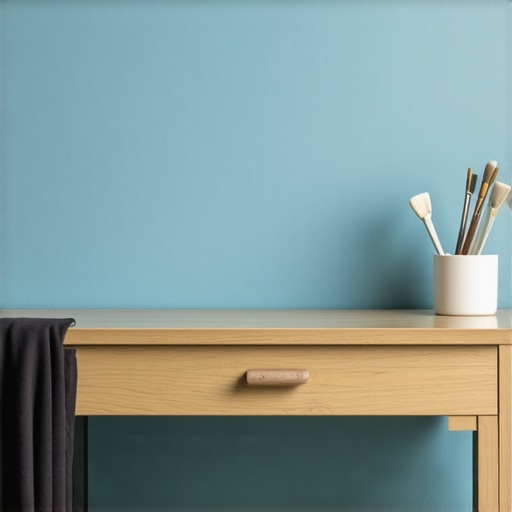
Mastering the Roll Without Creating a Texture Disaster
When you’re finally ready to apply the color, the ‘M’ technique is your best friend. Instead of going up and down in straight lines, which causes ‘tramlines’ or ridges, roll a large ‘M’ shape on the wall and then fill it in without lifting the roller. This distributes the paint evenly and is the fastest way to master the art of house painting with these pro tips. If you’re working near the ceiling, be extra careful with your pressure. Pressing too hard is a one-way ticket to frustration, but knowing how to avoid those ugly roller marks on your ceiling is about keeping a ‘wet edge’ at all times. Also, if you’re dealing with any textured surfaces, don’t forget the blue tape trick for getting clean lines on texture—it involves running a damp cloth or a tiny bit of the base color over the tape edge to seal it before the main color goes on. It’s the difference between a DIY job and a professional finish.
The Hardest Part Is Waiting for the Paint to Cure
The final step of the ‘how’ isn’t about the brush; it’s about patience. You might be tempted to shove your desk back against that beautiful new wall the moment it feels dry to the touch. Don’t do it. Paint ‘dries’ quickly, but it ‘cures’ slowly. If you lean a heavy bookshelf against a fresh coat too soon, you’ll end up with a permanent indentation or, worse, the paint will peel off when you move the furniture later. Always follow the 48-hour rule for moving furniture back against new walls. If this all feels like too much of a logistical mountain to climb, reaching out for professional house painting help is always an option. Just make sure you do your homework and learn how to spot an uninsured painter before they step on your ladder so your productive new space doesn’t turn into a liability nightmare.I used to think that the more I paid for a gallon of paint, the less work I’d have to do. It’s a common misconception that ‘premium’ labels excuse you from the fundamentals. One of the biggest myths I see is the ‘paint and primer in one’ shortcut. In my experience, these products are often just thicker paints with higher solids content, which might hide a color but won’t provide the same chemical bond as a dedicated primer. If you’re working on a surface that previously had an oil finish, you can’t just slap a ‘one-coat’ latex over it. You need to know how to successfully paint over oil-based finishes with water-based paint or you’ll be scraping it off with a fingernail by next Tuesday. This is a classic ‘pro vs. amateur’ hurdle that most people learn the hard way.
The High Cost of Chemical Incompatibility
Then there’s the ‘Oops’ factor that even seasoned DIYers miss: surface tension and chemical clashing. If your previous layer was a high-gloss alkyd, and you don’t scuff-sand or use a transition primer, your new beautiful blue won’t just fail; it will ‘alligator’ or slide right off. This is often the reason your exterior paint is peeling down to the wood, but it happens just as frequently on interior trim and office walls. I’ve seen people try to hide these mistakes with more layers, but why your new home needs a third coat of white paint (or blue!) usually comes down to poor initial adhesion and light scattering, not just a lack of pigment. You can’t out-paint a bad foundation.
Why Does My Calming Blue Keep Turning Into a Moody Lavender?
This is where we move from ‘person with a brush’ to ‘color scientist.’ The phenomenon is called metamerism. According to the Master Painters Institute (MPI), metamerism occurs because the spectral power distribution of your light source—be it LED, fluorescent, or natural sun—interacts with the specific pigments in your paint. A blue with red undertones will look like a crisp sky at noon, but the moment you turn on your warm evening lamps, that red undertone ‘wakes up’ and transforms your workspace into a purple cave. It’s a sophisticated trap that ruins more home offices than almost any other mistake. You can’t just trust a small card at the hardware store; you have to see the paint live through a full cycle of your specific lighting environment. 
Rescue Your Project Before It Spirals
If you do run into trouble, like a drip that dried before you caught it, don’t panic and sand the whole wall. Learning how to fix a run in your paint without starting over is a skill that saves hours of frustration and gallons of wasted product. Sometimes, the best expertise is knowing when a project is beyond your current toolset. If you decide to bring in the big guns, make sure they are legitimate. Knowing how to tell if your painter is actually licensed and insured is the ultimate safety net for your home and your sanity. Have you ever fallen into this trap where a color looked perfect in the store but turned into a disaster on your wall? Let me know in the comments.
The Specific Gear That Prevents a Mid-Project Meltdown
I’ve spent thousands on equipment over the years, and if there is one thing I’ve learned, it’s that a cheap brush is the most expensive thing you can buy. When I’m cutting in those sharp lines against the ceiling in my office, I only reach for a Purdy XL Glide. The stiff bristles give me the control I need to avoid the ‘shake’ that happens when you’re three hours into a shift. I’ve seen people struggle with how to stop your roller from skating across the wall, which usually happens because they bought a cheap, plastic-core frame that doesn’t provide enough tension. I use a high-quality cage frame with a 3/8-inch microfiber nap for office walls because it holds just enough paint to keep that ‘wet edge’ without dripping all over my keyboard. If I have to step away for a lunch break or a client call, I always use the trick for how to save a paint roller from drying out overnight—wrapping it tight in a plastic bag—so I don’t waste ten minutes washing it out.
How do I keep this office looking fresh for the next five years?
Maintenance isn’t just about the occasional dusting. For a high-use space like a home office, you need to understand ‘burnishing.’ This is what happens when your chair or a shelf rubs against the wall and leaves a shiny, ugly mark. To prevent this, I always choose a ‘scuff-resistant’ matte finish. According to the ASTM D2486 technical standard, which measures scrub resistance through rigorous cycles, higher-quality resins can withstand nearly double the friction of economy paints. If you do get a mark, don’t reach for a magic eraser first—they are abrasive and will strip the sheen right off. Instead, learn how to remove dried paint drips without sanding the whole wall or how to gently blot stains with a damp microfiber cloth. It’s a similar philosophy to how to maintain your newly painted exterior for ten years or more: proactive cleaning beats reactive repainting every time. 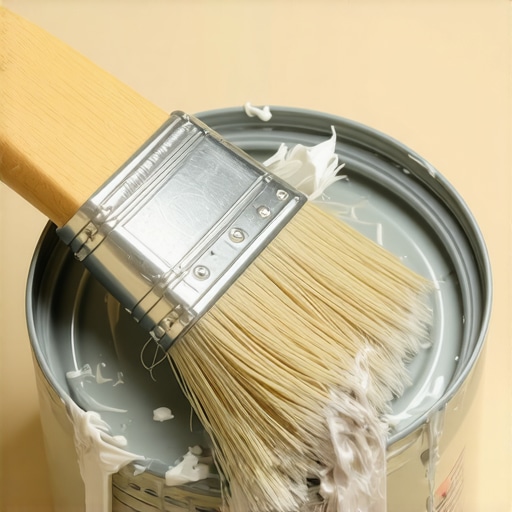
Why your walls are about to get a lot smarter
Looking ahead to 2025 and beyond, I predict we’re going to see a massive shift away from standard acrylics toward more ‘functional’ surfaces. We’re already seeing why clay-based paints are the best choice for older homes because they actually regulate humidity and prevent that stuffy ‘office’ smell. In the future, I expect paint to integrate with smart lighting systems to automatically adjust the perceived color temperature as the sun moves throughout the day. It sounds like sci-fi, but ‘metamerism-aware’ coatings are already in development. For now, the best thing you can do to future-proof your space is to keep your supplies clean. Use the rubber band trick for keeping paint cans mess-free so that when you need to do a touch-up in two years, the lid isn’t rusted shut and the paint is still usable. I challenge you to try that rubber band trick on your very next can—it’s a tiny habit that separates the pros from the frustrated amateurs.
The Hard Truth About My Five Biggest Painting Blunders
After years of trial and error, I’ve realized that house painting isn’t just about the color; it’s about the physics of the room. First, never assume “paint and primer in one” is a silver bullet. If you’re going over a dark or glossy surface, you absolutely need a dedicated primer or your new home needs a third coat of white paint just to hide the ghosts of the past. Second, I learned that your flooring acts as a giant reflector. If you have warm oak floors, that cool blue might pick up yellow tones and turn slightly green. Always sample your color against the floor, not just the ceiling. Another lightbulb moment: over-shaking or over-stirring your paint can actually introduce micro-bubbles that dry into a sandpaper-like texture. And finally, if you think you’re saving money by skipping the tape, remember that the blue tape trick for getting clean lines on texture is the only way to avoid those jagged edges that scream “amateur hour.”
The Tool Chest That Makes Professional Results Possible
If you want your office to look like a magazine spread, you need more than just a gallon of paint. I swear by the Purdy XL Glide for cutting in; its stiffness allows for a steady hand even when you’re tired. For the main walls, choosing the right roller nap for your specific wall is the difference between a smooth finish and an orange-peel disaster. I also highly recommend keeping a copy of “The Color Scheme Bible” by Anna Starmer on your desk—it helps you understand how different blues interact with furniture. Lastly, always keep a stash of lint-free microfiber cloths nearby; you’ll need them for the damp rag test for checking if your wall is too chalky before you even open a can. #IMAGE_PLACEHOLDER_E#
Your Most Productive Workday Starts with a Single Brushstroke
Redoing your workspace is an investment in your mental health and professional output. Don’t let the fear of a “messy” project stop you from creating an environment where you actually enjoy working. Whether you take the DIY route or decide that local painting experts are the better choice for your busy schedule, the goal is a space that breathes. Once that blue is on the wall and you feel that immediate drop in cortisol, you’ll wonder why you waited so long to fix it. Dive into these pro tips and reclaim your focus today. Have you ever picked a color that looked great in the store but turned out to be a disaster once it hit your office walls? Let me know in the comments below!